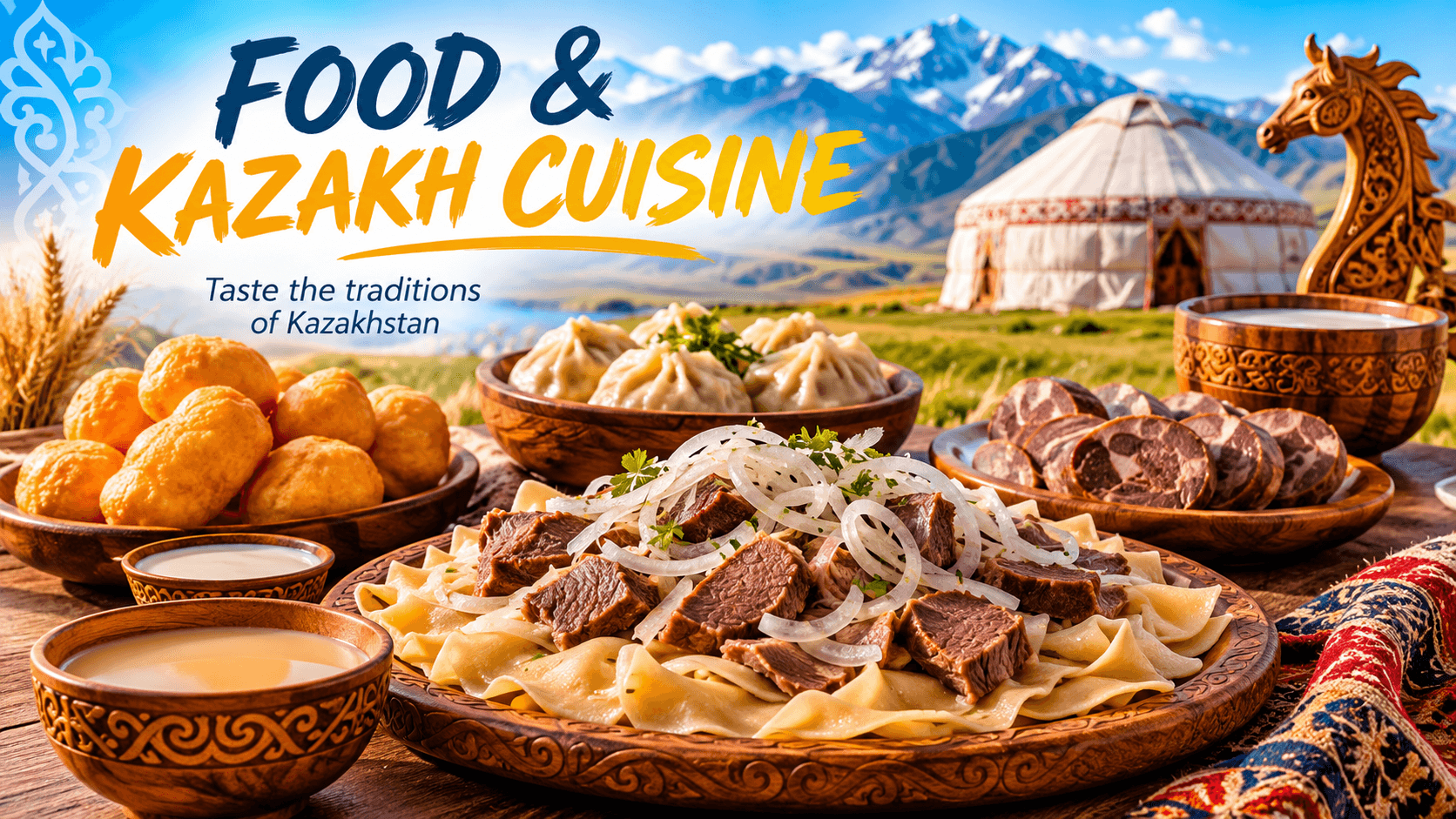
Food & Kazakh Cuisine
Kazakh cuisine is an important part of the country’s culture and hospitality. Traditionally, it is hearty and rich in meat, dairy products and homemade dough. Beef, lamb and horse meat are commonly used, while tea is an essential part of everyday life and is traditionally served hot, often with milk.
Traditional Dishes to Try
- Beshbarmak. One of Kazakhstan’s most famous traditional dishes, usually made with boiled meat (often horse meat, beef or lamb) served over flat homemade noodles with onion broth. Its name means “five fingers,” reflecting the traditional way of eating it by hand.
- Kazy. A traditional sausage made from horse meat, often served as part of festive meals and alongside beshbarmak.
- Baursaks. Small pieces of dough fried until golden and fluffy. They are commonly served with tea and are a popular treat at family gatherings.
- Manty. Steamed dumplings filled with minced meat and onions, usually served with sour cream or sauce.
- Kuurdak. A traditional dish of fried meat, often prepared with potatoes and onions.
- Kumis. A traditional fermented drink made from mare’s milk. It has a distinctive sour taste and is an interesting part of Kazakhstan’s nomadic heritage.
- Kurt Small, dried balls made from fermented dairy products. Their salty, tangy taste makes them a unique traditional snack.
- Irimshik Traditional Kazakh cheese. A traditional Kazakh cheese made from milk. Irimshik has a mild, milky flavor and a soft or slightly crumbly texture. Depending on how it is prepared, it can be fresh and moist or cooked into a firmer, yellowish cheese.
Tea & Hospitality
Tea is more than just a drink in Kazakhstan — it is an important part of hospitality and social life. Black tea is commonly served with milk, sweets, dried fruits, baursaks and other treats. Guests are often offered tea when visiting a Kazakh home, and accepting a cup is a lovely way to experience local hospitality.
Vegetarian & Special Dietary Requirements
Traditional Kazakh cuisine is heavily based on meat and dairy products, but vegetarian meals can be arranged upon request. Vegetarian, vegan, halal and other dietary requirements should be communicated to us in advance so we can help arrange suitable meals throughout your trip.
Useful Food Tips for Travellers
- Try local specialties. Do not miss the opportunity to taste beshbarmak, baursaks and other traditional dishes during your visit.
- Be open to new flavours. Some traditional foods, especially horse meat and fermented dairy drinks, may be unfamiliar to international visitors.
- Inform us about dietary restrictions. Let us know in advance about allergies, vegetarian or vegan preferences, and any foods you cannot eat.
- Drink bottled or safely treated water. When travelling in remote areas, follow your guide’s advice about drinking water.
- Enjoy local hospitality. Sharing food and tea is an important part of Kazakh culture. It is a wonderful opportunity to connect with local people and learn about their traditions.